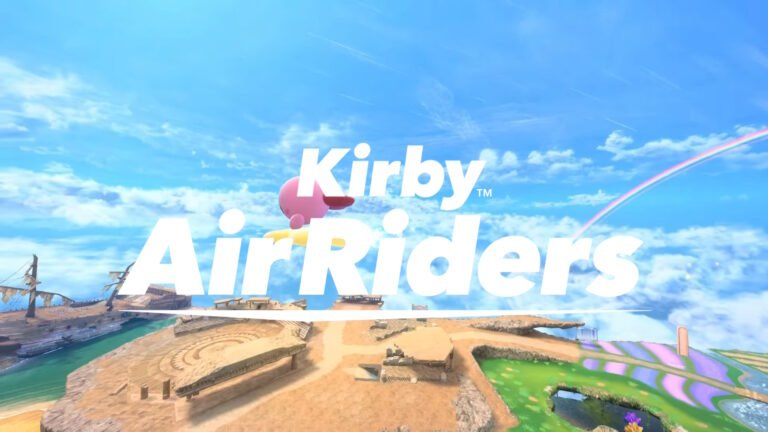
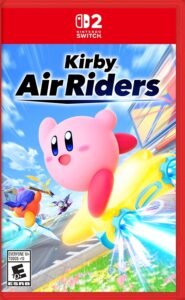
Kirby Air Riders
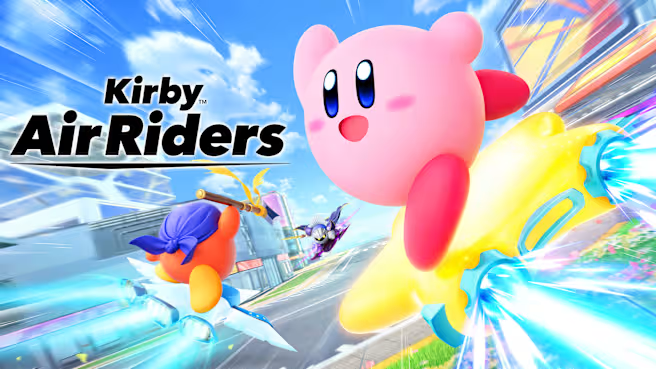
Kirby Air Riders revives a GameCube cult classic on Switch 2 with chaotic multiplayer, simple controls, and the return of City Trial.
Why This One Is on My Radar
Kirby Air Ride was one of those games that people either bounced off immediately or remembered forever.
I was first introduced to Kirby Air Ride at a friend’s house, and I immediately fell in love with it. We rarely touched anything beyond City Trial, and we did not need to. Hours would race by as we cycled through matches, fueled by buttery popcorn and the kind of chaotic multiplayer fun that only Kirby Air Ride could deliver.
That is what makes Kirby Air Riders so interesting. This is Nintendo bringing back another familiar name whose reputation grew over time because its best modes felt like a playground, a competition, and a multiplayer party.
Seeing Kirby Air Ride finally receive a sequel filled me with excitement.
The Short Version
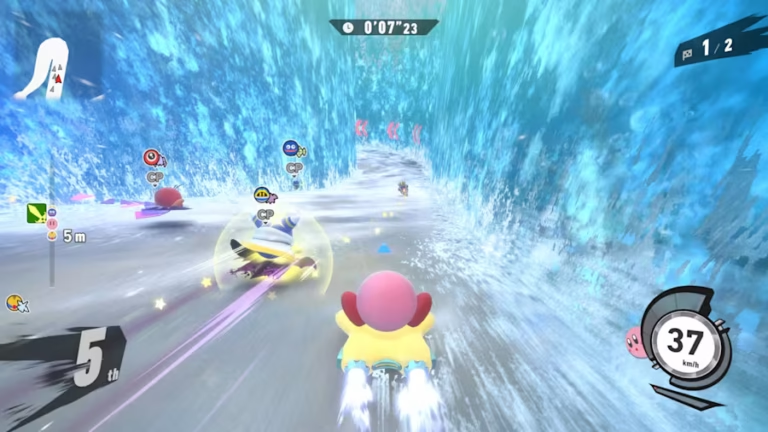
Kirby Air Riders is a Nintendo Switch 2 racing game that brings back the simple controls, fast movement, and multiplayer-focused chaos that made the original Kirby Air Ride a cult favorite. It includes returning modes like Air Ride, Top Ride, and City Trial, while also adding a new single-player campaign called Road Trip.
This is worth paying attention to because Kirby Air Riders does not try to compete with Mario Kart by becoming a more traditional kart racer. Its identity is built around simplicity, unpredictability, and shared moments, especially in City Trial, where players race around a city, upgrade their machines, and then get thrown into a chaotic final challenge.
The biggest caution is that the game’s simplicity is both its biggest strength and its clearest limitation.
Quick Details
Game file size: 21.9 GB
No. of players: Single system 1–4, local wireless 2–8, online 1–16
System: Nintendo Switch 2
Release Date: November 20, 2025
ESRB rating: E10+ for Everyone 10+
What Kind of Game Is This?
Kirby Air Riders is a racing game built around simple controls, fast courses, and chaotic multiplayer. Like the original, it is not trying to be the most technical racer in Nintendo’s lineup. Instead, it focuses on accessibility, timing, machine variety, and the kind of matches that are easy to understand but hard to predict.
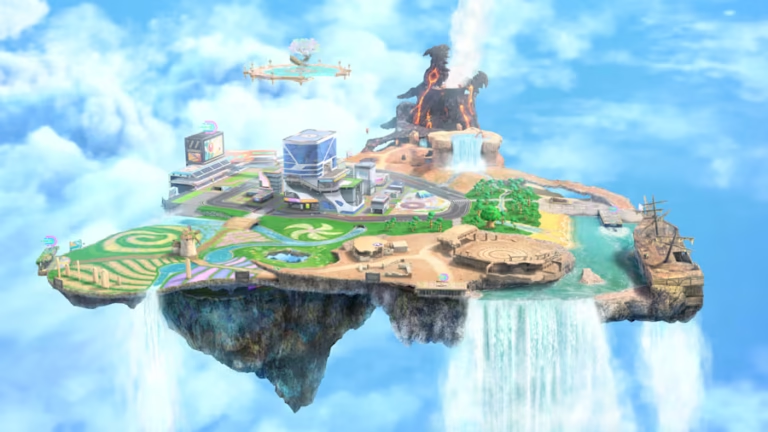
The game includes Air Ride, the traditional racing mode where players choose a character and machine before racing across full 3D tracks. It also brings back Top Ride, which uses a top-down perspective, and City Trial, the mode that still feels like the heart of the entire experience.
City Trial is the main reason this game matters to so many longtime fans. Players race freely through a city, collect upgrades, build their machines, and then compete in a final mini-game once time runs out. In Kirby Air Riders, that chaos expands with support for up to 16 players in races and City Trial, making matches feel more energetic and alive than the original GameCube version.
Why It Matters
Kirby Air Riders matters because the original Kirby Air Ride was never just another Nintendo racing game. It launched in the same era as Mario Kart: Double Dash!! and F-Zero GX, but it had almost no interest in chasing either one. Instead, it embraced a minimalist control scheme and a stranger, more social kind of racing identity.
That approach was divisive at the time, but it is exactly why the game built a cult following. Kirby Air Ride became memorable because it felt different. It was simple enough for anyone to pick up, but City Trial gave players a reason to keep coming back with friends.
For Switch 2, Kirby Air Riders proves that not every revival needs to become larger, louder, or more complicated. Sometimes the smartest thing Nintendo can do is understand what made a cult classic work, modernize the parts that need help, and leave the weird heart of the game intact.
My Player Notes
What I’m excited about
I’m excited about Kirby Air Riders because City Trial still feels like the soul of the series. The original was at its best when friends were all racing around the same city, stealing upgrades, preparing for the final event, and laughing when everything fell apart in the last minute.
What I’m cautious about
I’m cautious because the game’s simplicity can only carry it so far. The approachable controls are part of the charm, but modes like Road Trip need more depth if the game wants to satisfy players who mostly play solo.
What I want to know next
I want to know how well Kirby Air Riders holds players long-term. The multiplayer chaos is immediately fun, but the real test is whether the unlocks, machine variety, online play, and City Trial loop keep people coming back after the novelty fades.
What would make this work
This works if players treat Kirby Air Riders as a social racing game first. It is at its best with friends, quick sessions, unpredictable matches, and a willingness to embrace something a little different from Nintendo’s more traditional racers.
What could hold it back
What could hold it back is single-player depth. If someone comes in expecting a robust solo campaign, Road Trip may feel too light, and City Trial’s final events can sometimes feel too brief compared to the time spent building up your machine.
Who I'd Recommend This To
Kirby Air Riders is worth keeping on your radar if you enjoy racing games, chaotic multiplayer, approachable controls, and Nintendo games that are willing to be a little strange. It is especially easy to recommend if you have nostalgia for the original Kirby Air Ride or if you always heard about City Trial and wondered why fans talked about it so much.
This is also a strong fit for players who want something different from Mario Kart. Kirby Air Riders is not trying to replace Nintendo’s biggest racing series. It works because it has its own personality, its own rhythm, and its own kind of multiplayer energy.
I would be more cautious if you mainly play racing games for deep solo progression, technical driving systems, or a campaign with a lot of narrative weight. Kirby Air Riders is joyful, polished, and highly recommended, but it is strongest when treated as a multiplayer-first experience built around shared chaos.
Start Here