Kirby Air Ride released in 2003 on the Nintendo GameCube as a racing game largely uninterested in competing with Nintendo’s other flagship racers, such as Mario Kart: Double Dash!! and F-Zero GX. Instead, it embraced an intentionally minimalist design philosophy, featuring extremely simple controls that required little more than steering and precise timing.
That approach proved divisive at launch. Critics questioned whether the game’s pared-back mechanics offered enough depth compared to the more technically demanding racers of the era. Despite its mixed reception, Kirby Air Ride went on to find moderate commercial success—selling over one million copies worldwide—and, more importantly, cultivating a devoted cult following. In the years since, many fans have come to regard it as one of the most underrated gems of the GameCube era.
For me, that legacy is deeply personal. I was first introduced to Kirby Air Ride at a friend’s house, and I immediately fell in love with it. We rarely touched anything beyond City Trial—and we didn’t need to. Hours raced by as we cycled through matches, fueled by buttery popcorn and the chaotic fun that only Kirby Air Ride could deliver. I even remember my mom asking whether I wanted the game for my birthday or Christmas, and I surprisingly told her no—not because I didn’t enjoy it, but because I felt its true potential could only be realized in a shared, multiplayer setting. Kirby Air Ride wasn’t just a game I wanted to own; it was an experience I wanted to keep sharing at my friend’s house.
The Reveal of Kirby Air Riders
Fast forward to 2025 and the launch window of the Nintendo Switch 2. Nintendo unexpectedly revealed that Masahiro Sakurai had quietly been working on a long-awaited sequel: Kirby Air Riders, releasing exclusively on Nintendo’s new hardware in November 2025. Arriving just months apart from another major Nintendo racing title, Mario Kart World, Kirby Air Riders immediately raised an important question—how does the revival of one of Nintendo’s most unconventional racers carve out its place in a crowded, high-profile lineup?
Seeing Kirby Air Ride finally receive a sequel filled me with excitement, and I couldn’t wait to experience it with friends all over again. This time, there was no hesitation—I knew I had to buy the game.
Seeing Kirby Air Ride finally receive a sequel filled me with excitement, and I couldn’t wait to experience it with friends all over again. This time, there was no hesitation—I knew I had to buy the game.
Launch Window and Returning Modes
Road Trip - A New Campaign Mode
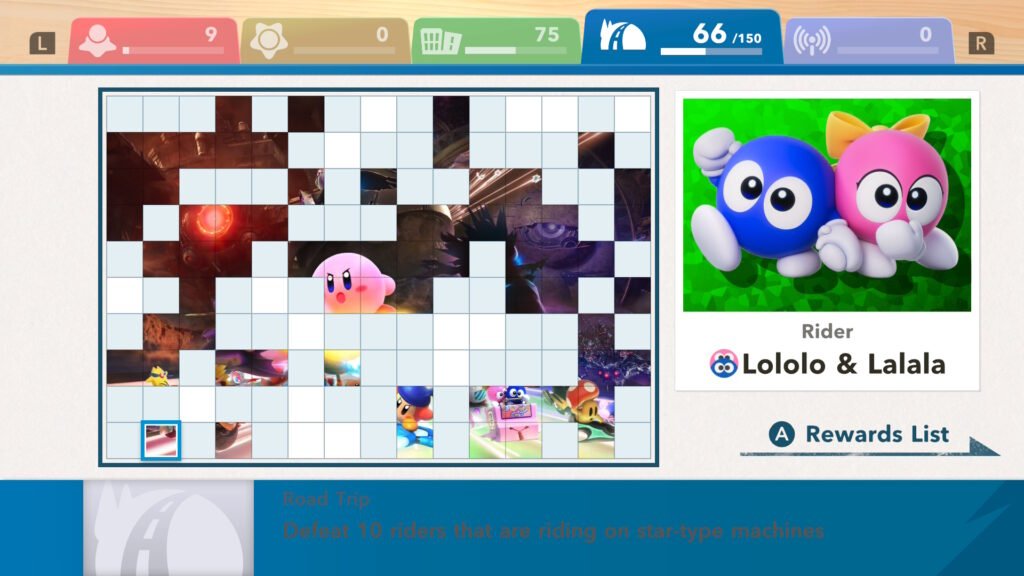
New to the experience, however, is a campaign mode called Road Trip. Staying true to the series’ minimalist roots, Road Trip is intentionally straightforward: players progress along a linear path, choosing one of three branching options before eventually facing a boss encounter. While this light narrative structure works well as a tutorial—gradually teaching how different machines handle and perform—it ultimately lacks depth. Its simplicity makes it approachable, but also renders it forgettable, offering little incentive for repeat play once completed. As a result, we at Input Lag expect most players will spend the bulk of their time in the returning multiplayer-focused modes, where the game truly finds its footing.
Air Ride - Classic Racing Returns
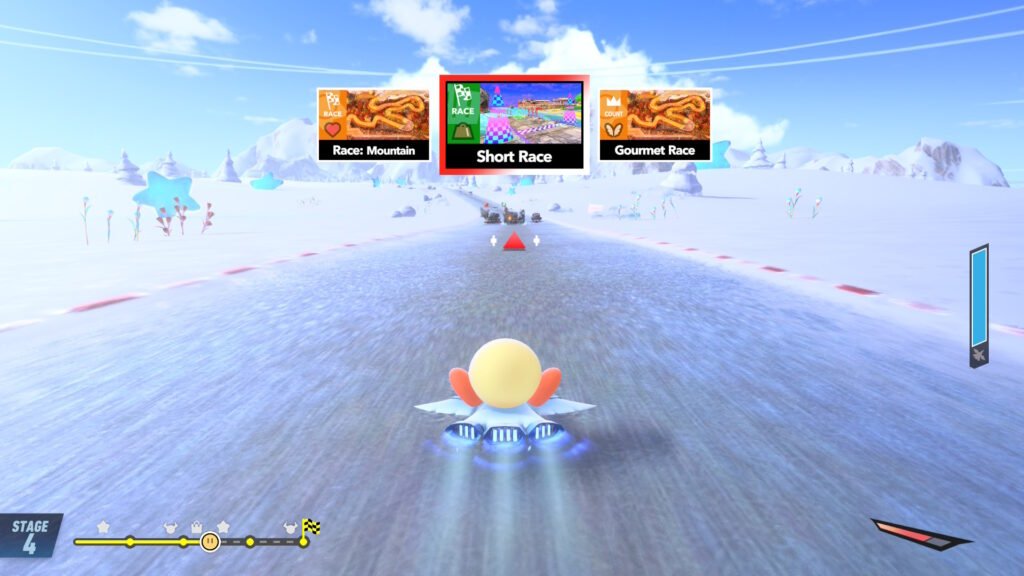
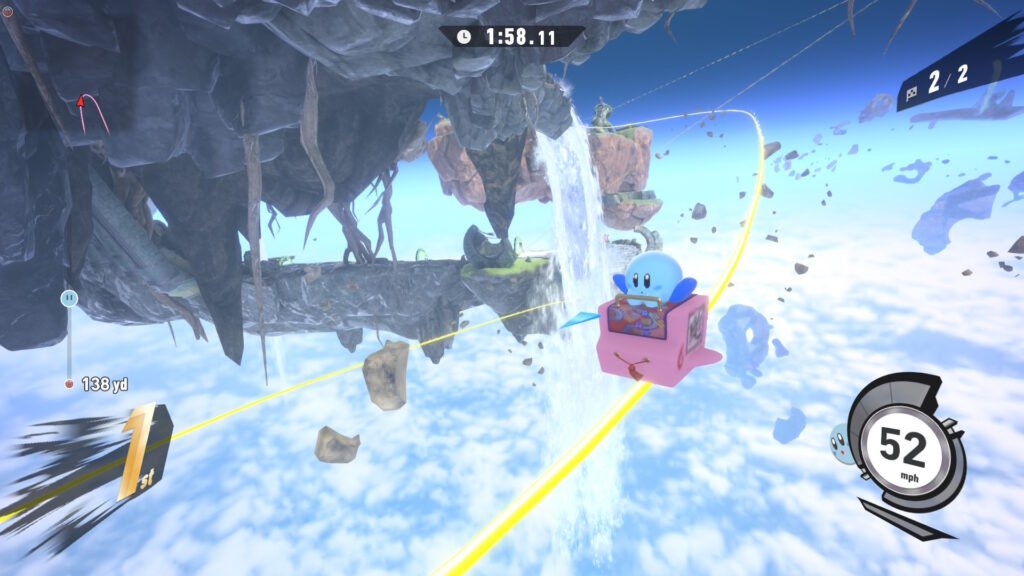
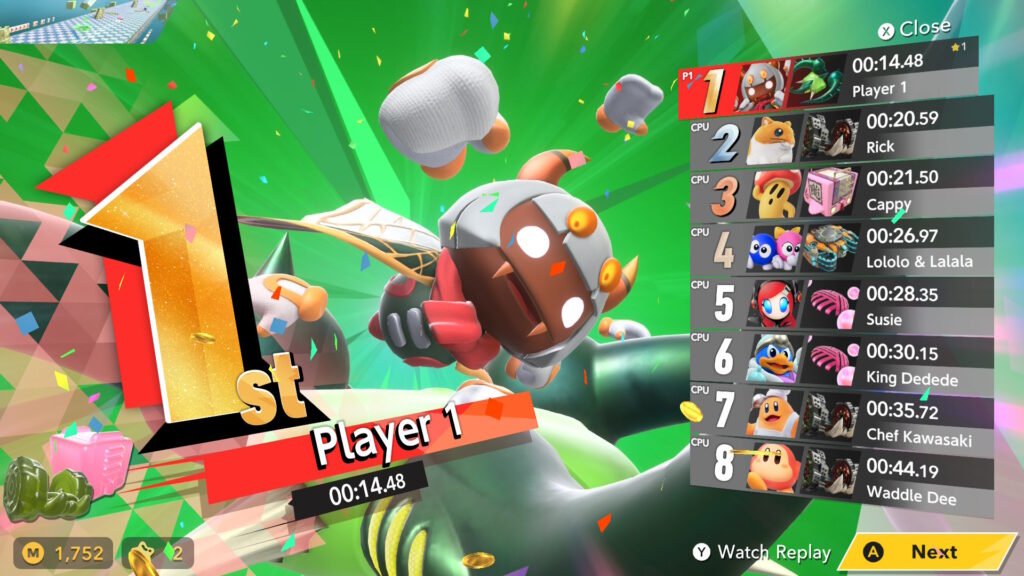
Air Ride, the series’ traditional racing mode, remains a core pillar of the experience. Players select a character, choose a machine, and race across expansive tracks rendered in full 3D. From swirling oceanic vortexes to sweeping autumnal mountain ranges, Air Ride showcases exactly why this sequel feels at home on the Nintendo Switch 2. Enhanced visuals and a smoother framerate bring each course to life, resulting in tracks that are consistently jaw-dropping and among the most impressive in the game.
Top Ride and the Heart of City Trial
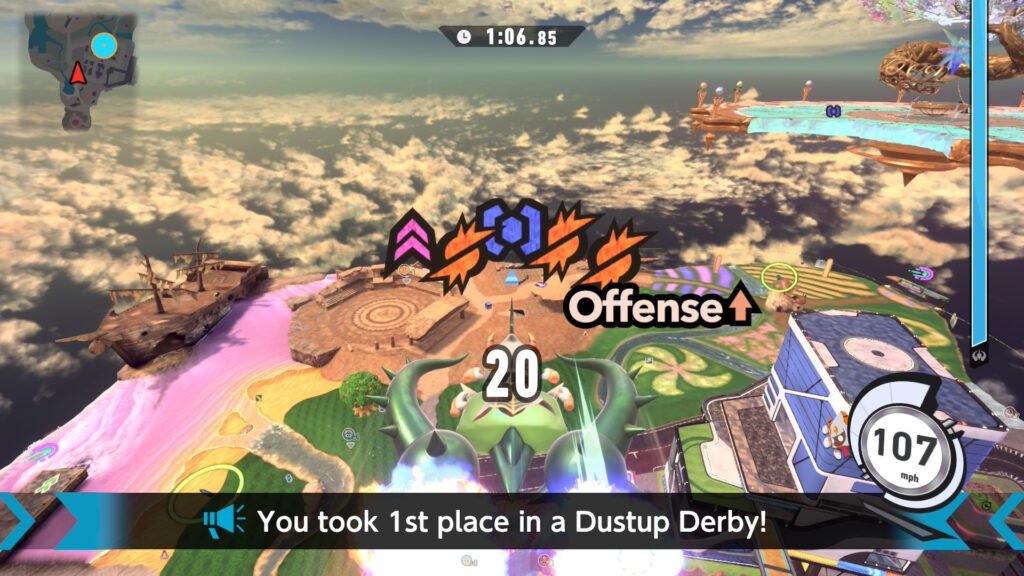
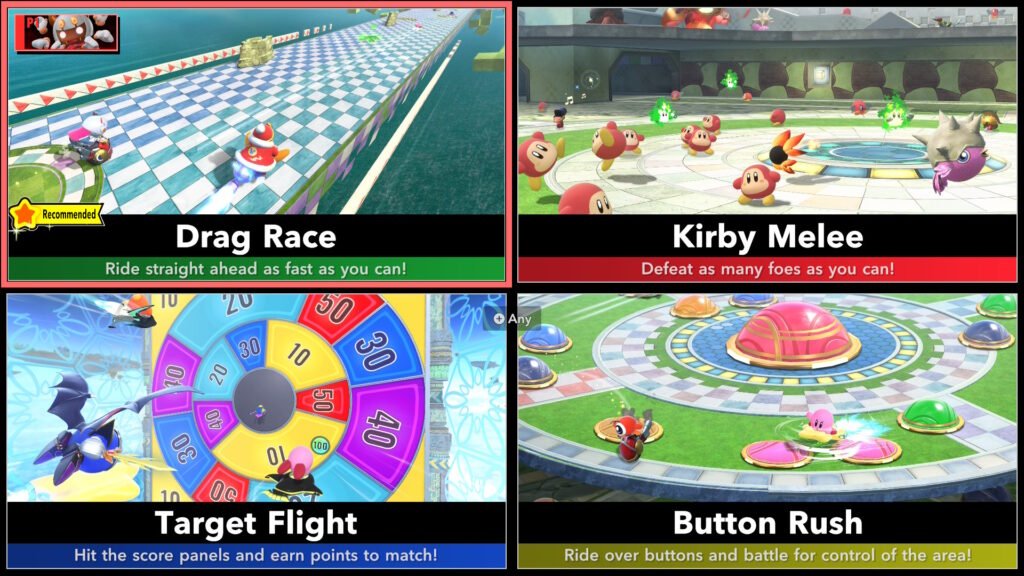
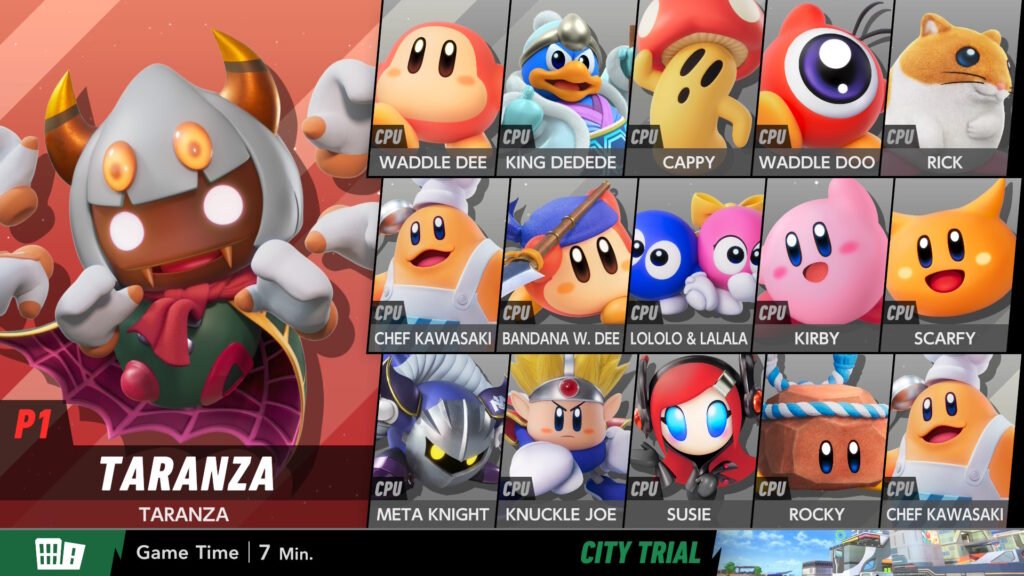
While Top Ride fully embraces the franchise’s simplified control scheme with its top-down perspective, the true heart of Kirby Air Riders lies in City Trial. Here, players race freely through a sprawling city, upgrading their machines until the timer runs out. Once time expires, up to sixteen players are funneled into a rotating mini-game, transforming careful preparation into chaotic, unpredictable showdowns—and delivering the kind of shared moments that defined the original game’s legacy.
That said, City Trial isn’t without its shortcomings. After spending up to seven minutes carefully building a machine, players are thrust into a single mini-game that often lasts less than a minute. Once it concludes, the vehicles players invested so much time upgrading are stripped away, which can feel abrupt. A longer endgame sequence—perhaps progressing through four or five mini-games—would better reward the time spent preparing and allow each machine’s strengths to shine a bit longer.
Performance and Online Play
Each mode can be played in both single-player and multiplayer—except for Road Trip, which is locked to a solo experience—but true to the series’ roots, multiplayer is where Kirby Air Riders shines brightest. Performance in single-player is buttery smooth, maintaining a consistent 60 frames per second with little to no noticeable drops. Online play can become slightly more demanding during the game’s most chaotic moments, but during our extensive testing at Input Lag, we encountered no significant or frustrating performance issues. Matchmaking is quick, and the online experience remains consistently enjoyable.
That multiplayer focus is ultimately what elevates the experience. Kirby Air Riders supports up to 16 players in races and City Trial—four times the player count of the original GameCube release—and the increase makes the world feel constantly alive. With so many players sharing the same space, matches are energetic, unpredictable, and rarely dull. On a single console, split-screen play supports up to four players, while local wireless play across multiple consoles allows up to eight players in City Trial, offering plenty of flexibility for in-person sessions—even if we weren’t able to test those setups as extensively.
Sound Track and Presentation
The game’s soundtrack is thoroughly enjoyable, and there’s little doubt that fans will appreciate the variety of tracks on offer. That said, a stronger homage to the original soundtrack—particularly in City Trial—would have been a welcome addition. The absence of the classic City Trial theme on Nintendo Switch 2 feels like a missed opportunity for longtime fans.
Single-Player Replayability and Progression
While Kirby Air Riders truly shines in multiplayer, players looking for a single-player experience shouldn’t write it off. Much of my time with the game has been spent solo, often jumping in for quick City Trial runs that make it easy and enjoyable to return for short sessions. I also found myself working through the game’s extensive checklist—unlocking maps, characters, and machines—which mirrors the original’s progression system and remains deeply satisfying to complete.
Final Verdict
Ultimately, Kirby Air Riders feels like a game built for everyone. Its approachable controls make it easy for just about anyone to pick up and play, yet beneath that simplicity lies a surprising amount of variety. The machines themselves are diverse and situational, encouraging different playstyles. For example, the newly introduced Tank machines sacrifice flight distance compared to traditional Stars, but their bulkier design favors players seeking a more aggressive approach.
Kirby Air Riders earns an 8/10 from Input Lag because it succeeds overwhelmingly at what it sets out to do, even if it stops short of being a fully rounded experience. At its best, the game delivers some of the most joyful chaos on the Nintendo Switch 2, with City Trial once again standing as the heart and soul of the experience. Expanded player counts, smooth performance, and gorgeous tracks help modernize a cult classic without compromising its identity.
That said, the game’s commitment to simplicity and nostalgia is both its greatest strength and its most limiting factor. While modes like Air Ride and City Trial shine in social settings, the slightly lackluster Road Trip campaign lacks depth and replayability, feeling more like an extended tutorial than a meaningful single-player offering. Likewise, City Trial’s endgame can feel abrupt, occasionally undercutting the time players spend carefully building their machines.
An 8/10 reflects a game that is confident, polished, and deeply fun—especially with friends—but one that leaves clear room for refinement. Kirby Air Riders may not redefine the racing genre, but it doesn’t need to. Instead, it proudly embraces accessibility, unpredictability, and shared moments, making it one of the Nintendo Switch 2’s most enjoyable multiplayer experiences.
We at Input Lag believe Kirby Air Riders is a game for anyone who enjoys racing titles—especially players willing to embrace something a little different. While the game’s launch window has already passed, we highly recommend adding it to your Nintendo Switch 2 library. It’s a uniquely joyful experience, and one we don’t think you’ll regret.
Input Lag Score: ★★★★☆ (8/10) Input Lag Ranking: Highly Recommended
Scott (Scotty) Greenhalgh is the founder and owner of Input Lag, an independent Nintendo-focused publication. Scotty brings a player-first perspective informed by years of hands-on experience with Nintendo games to his reviews, rankings, and editorial coverage. His writing focuses on how games feel to play, their long-term value, and the impact Nintendo’s creative and business decisions have on players.
Outside of Input Lag, he also creates Pokémon-focused content online under the name Gr3atScotty.